Building a photographic series
A working note on selection, sequencing, captions and the space between images, through four photographs from the Istanbul archive.
- Place
- Yeniköy, Istanbul
- Photographed on
- 2025-01-01
Photography and selection — 08
Choosing a photograph and bringing several photographs together call for different decisions.
Looking at a single frame, I can consider the light, the composition and the small movements within it. When another photograph appears beside it, my view of the first image changes too. A detail that caught my attention recedes; a line I had overlooked begins to connect the two images.
The work of a series begins here: seeing what photographs do to one another.
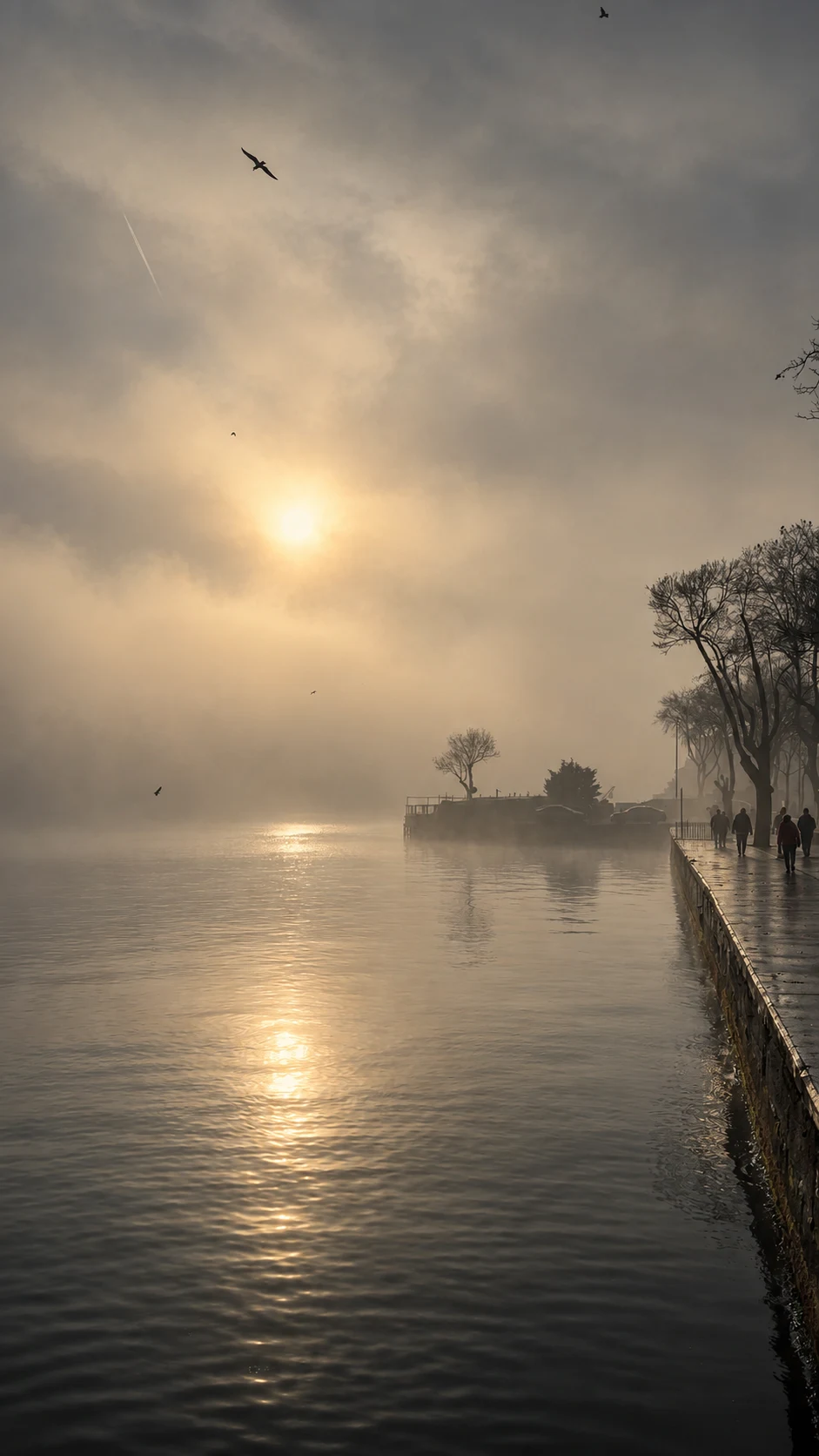
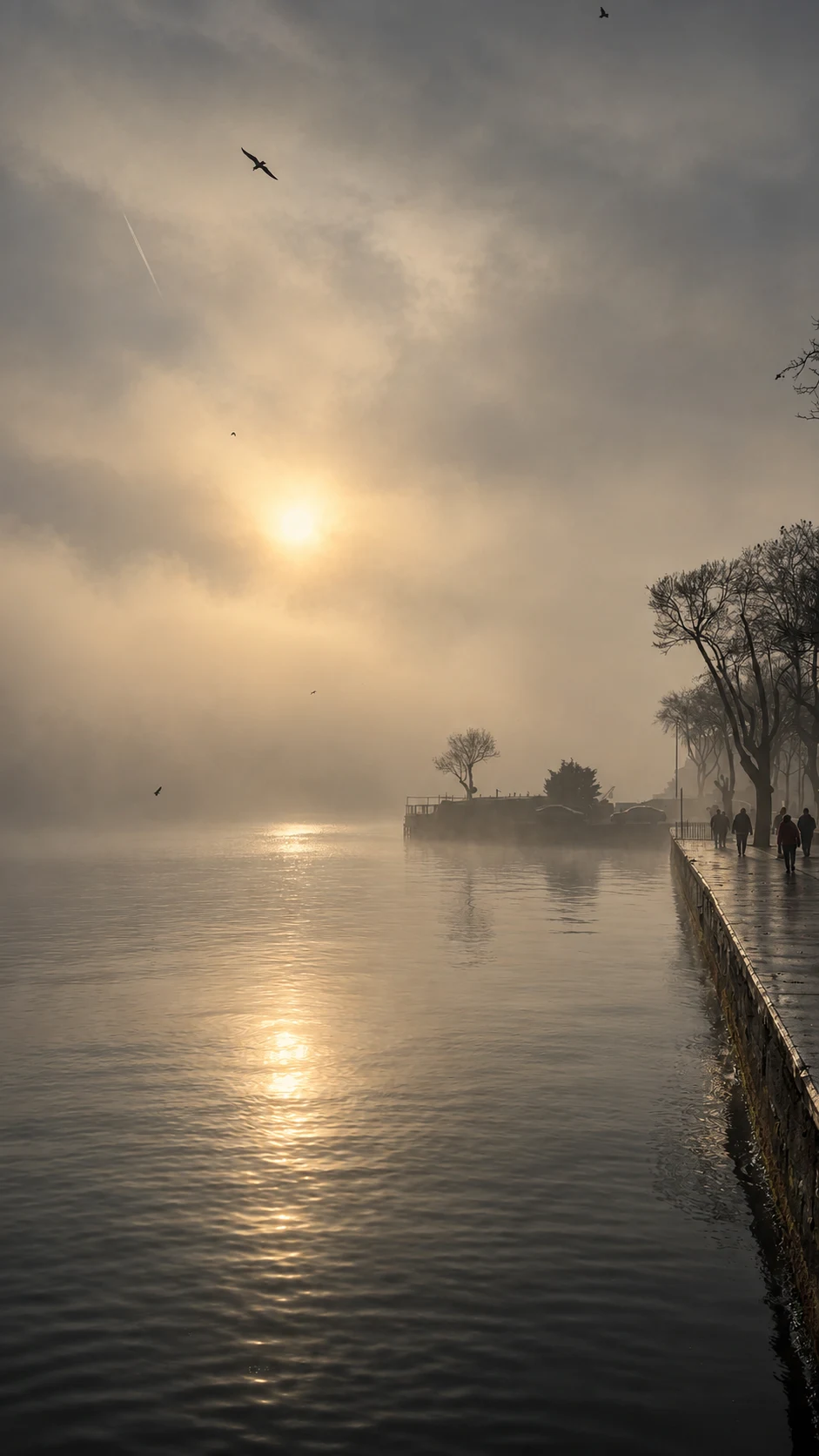
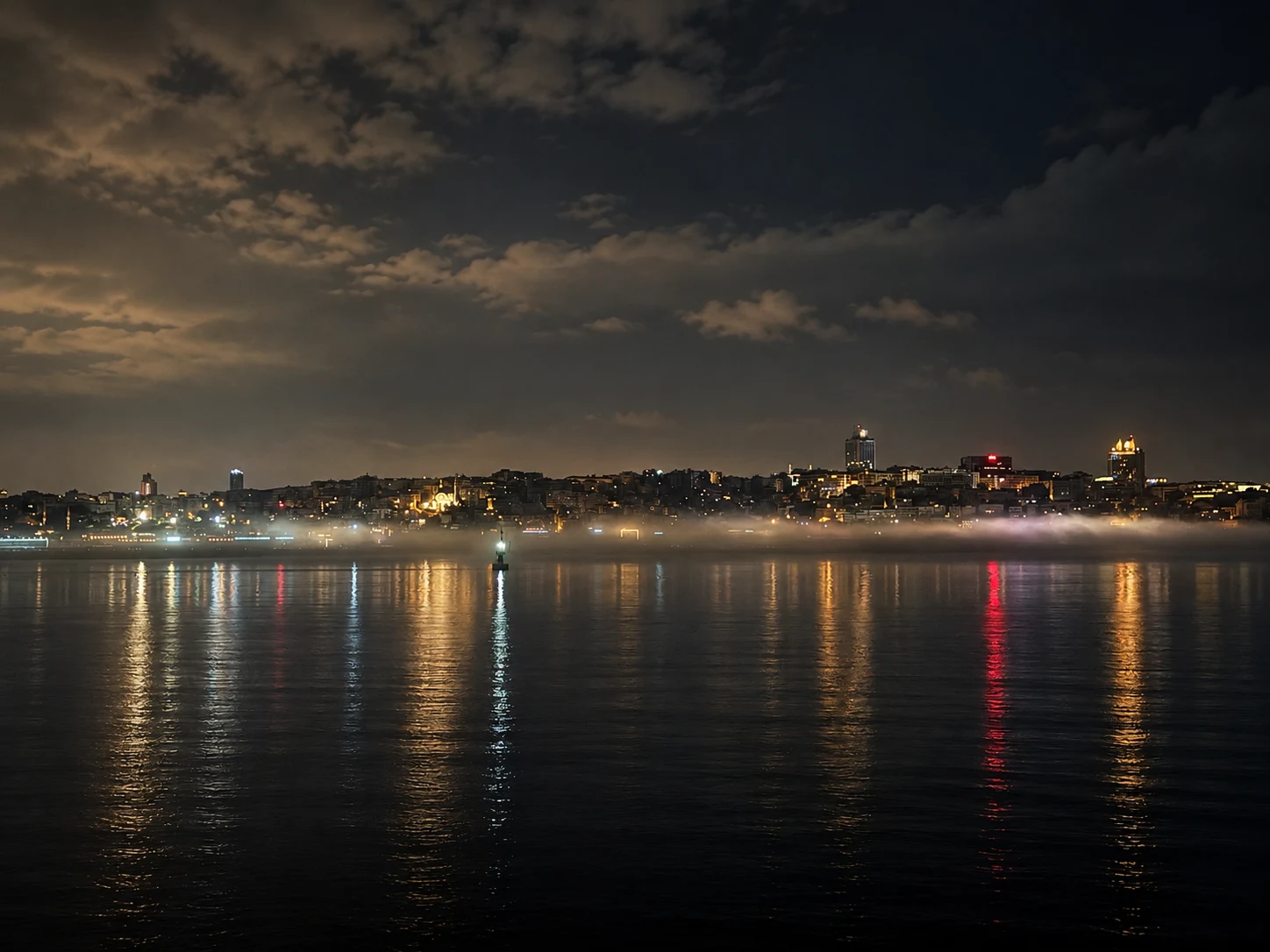
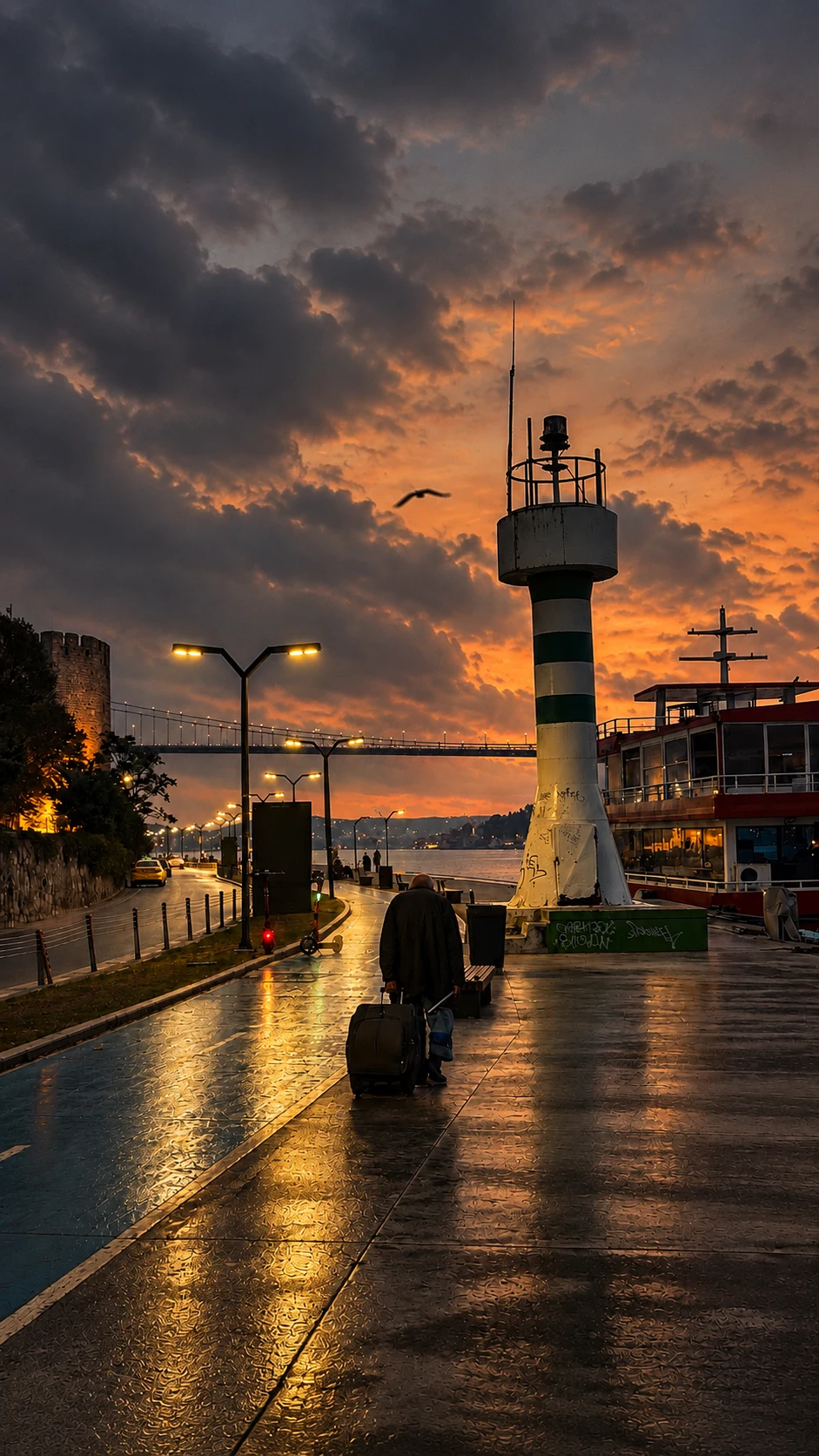
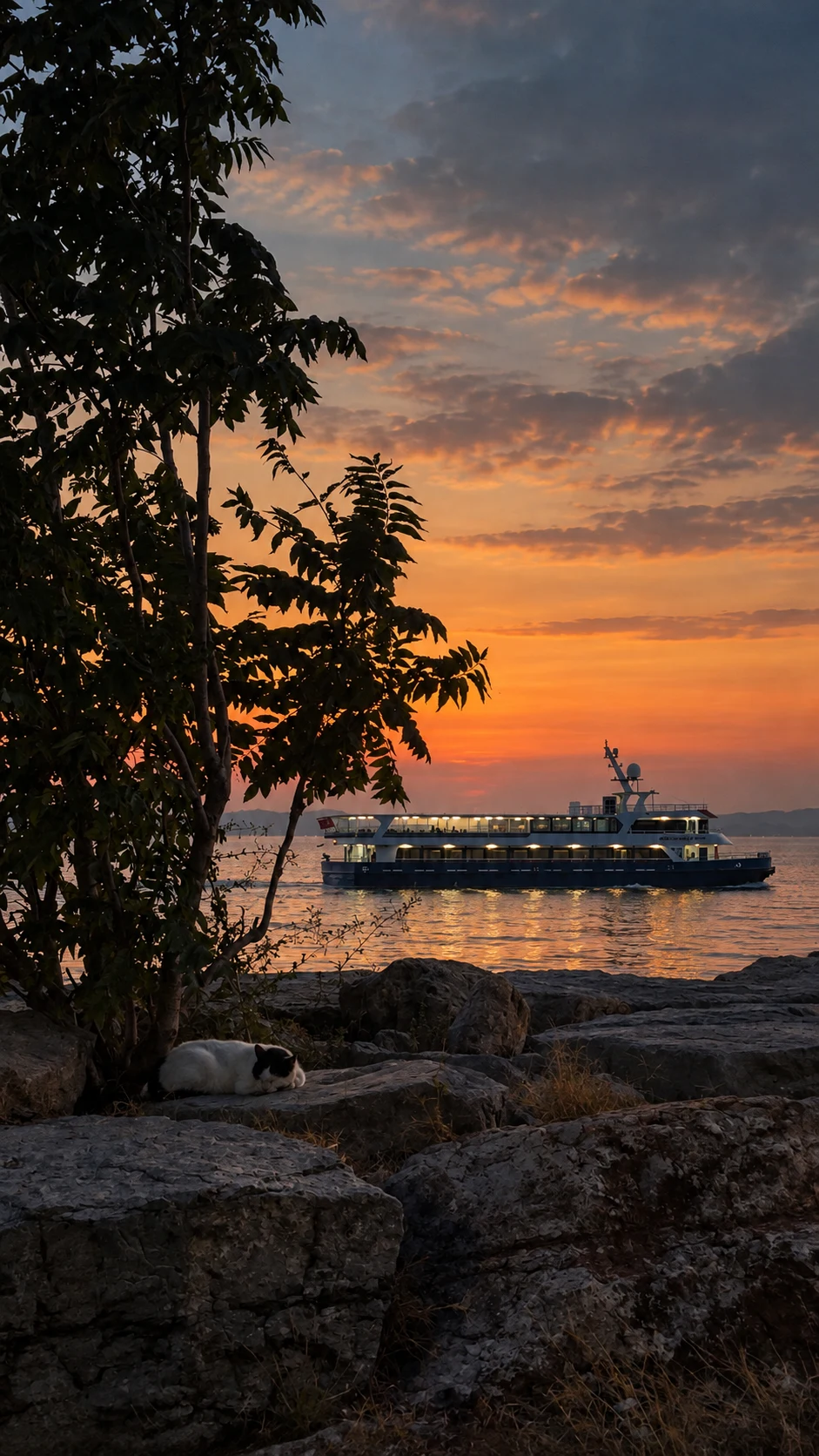
For “Time that remains by the shore”, I focused on four images from my Istanbul archive. A misty morning in Yeniköy, night lights seen from Harem, a person bending towards a suitcase in Aşiyan, a cat lying on stone in Kadıköy.
All four contain the shore. Sharing a subject, however, does not yet explain how they will sit together.
In Yeniköy, the gaze opens towards the distance. The path and people grow indistinct in the mist. In Harem, I make out the opposite shore by its lights. In Aşiyan, the human body and suitcase draw attention close. In Kadıköy, despite the ferry offshore, my eye can return to the cat in the foreground.
What brings these four photographs together may be the movement they establish between distance and proximity. Each asks the gaze to pause somewhere different.
This gives me a question for the selection: When I look at a shore, where does my attention travel?
The question offers a criterion for deciding which photographs might stay together.
Sequencing is one way to test that criterion.
Suppose I begin with Yeniköy and follow it with Harem. I move from the first image’s pale, misty surface into the darkness of night. In both I look across the water, but one holds mist that conceals detail, the other lights emerging from darkness.
When Aşiyan follows, the distance changes. Instead of seeking things far away, as in the earlier frames, I encounter the posture of a person nearby. The Kadıköy photograph could sustain that proximity at another scale: the texture of stone, the cat’s body, leaves entering from the edge.
Such an order proposes a reading that moves the gaze from far to near.
Starting with Aşiyan produces a different series. The first encounter is with a person; I might begin reading the subsequent views as a continuation of that person’s surroundings. Yet I know of no such connection between the events in the photographs.
This is where sequencing carries responsibility alongside its power. Two images placed together can suggest a continuity that never occurred between them.
That is why I want to preserve the capture dates.
The Yeniköy photograph’s caption says 1 January 2025. The other three images are from August 2026. They are not parts of the same walk or the same day.
It is possible to arrange photographs by light, as morning, evening and night. Such an order could suggest a narrative moving along the shore over a single day. But its constructed nature needs to remain visible.
Place and date are small points of reference accompanying a photograph. They leave a distance between what an image evokes and what we actually know.
The scale of the caption matters too. Too long, and it can overtake the photograph. Incomplete, and it can let separate images blend too readily.
The hardest decision in a selection may concern the photograph left out.
An image I love on its own may say the same thing twice within the flow I am trying to build. Similar light, a nearby viewpoint, the same distance again…
Repetition sometimes establishes a rhythm. Sometimes it holds the gaze in place. To tell the difference, I can try putting space between two photographs, swapping them, or temporarily removing one.
I want to see what each image contributes to the series.
A photograph’s absence from this selection does not diminish its place in the archive. It may find a more meaningful role in a sequence built around another question. The archive keeps these possibilities open; a selection brings one particular reading forward.
The publication surface participates in that reading too.
Moving from one photograph to another on screen differs from seeing both at once on a page. Encountering a single image, I may stay longer with its details. With two frames side by side, my eye begins to seek similarities and differences.
The space between photographs, the position of a caption and the visibility of navigation arrows are therefore substantial decisions. The room left around an image affects how it can be approached.
This is where the calm I want for the site’s photography area takes shape. A small caption beside the photograph to give its place and date; an arrow within reach when I want to continue. Leaving some control over the pace of looking to the visitor.
An initial order to work on for these four photographs is:
Yeniköy → Harem → Aşiyan → Kadıköy
I see this as a proposed reading moving from far to near. Before deciding, I need to see the photographs side by side at the same scale, then move through them individually. I want to understand whether the connection established when they are seen together holds when they are viewed separately.
The transition between the last two images remains an open question in particular. Seeing the Kadıköy cat after the person in Aşiyan could draw attention to small details of everyday life. The same transition could also give the person’s image a feeling I do not intend.
This is where I will look again as I build the series.
Choosing a photograph does not mean I have chosen its neighbour. Sometimes the small interval between two images changes the whole sequence.
Previous essay: Time that remains by the shore. Photographs from the Shore and Sea archive.
- New Year’s Morning on the Yeniköy Waterfront · Yeniköy, Istanbul · 1 January 2025.
- Night and Mist from Harem · Harem, Üsküdar · 3 August 2026.
- A Lone Traveller at the Harbour after Morning Rain · Aşiyan, Istanbul · 30 August 2026.
- Kadıköy at Sunset · Kadıköy, Istanbul · 28 August 2026.
Photographs: Ömer Asım. Places and dates follow the archive captions. AI was used only for colour adjustment. The proposed sequence does not mean that the existing gallery has been reordered.
This connects to
Revisits the previous essay’s four shore photographs through decisions about selection and sequencing.
Uses the Yeniköy, Harem, Aşiyan and Kadıköy photographs from this series; the proposed sequence has not been applied to the gallery.